Homemade Pizza With Kids: A Job for Every Age
A simple homemade pizza recipe to make with kids, with jobs for toddlers, 4–7s, 8–12s and teens, what the adult handles, topping tips, allergen swaps and choking-safety advice for under-4s.
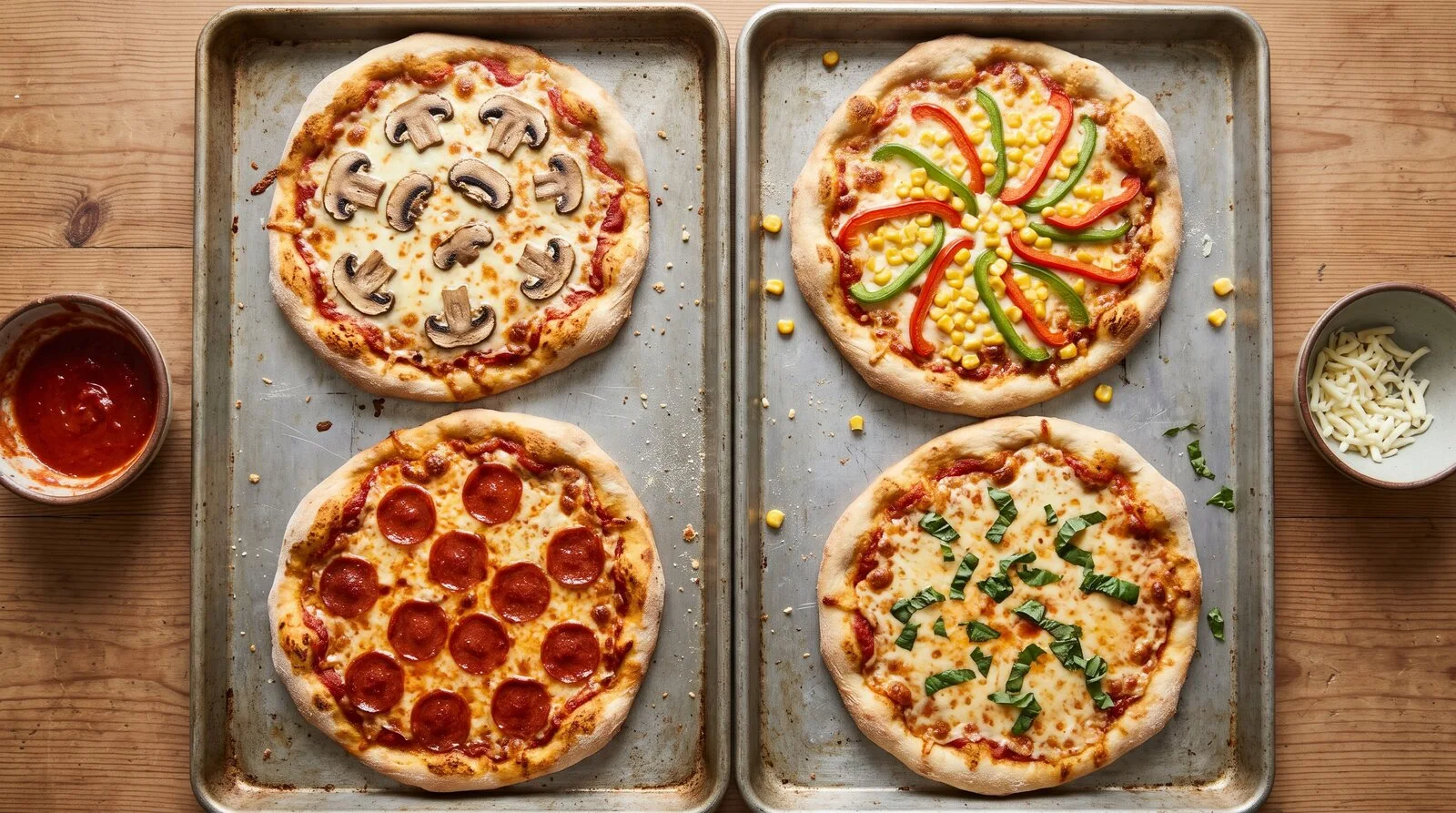
Homemade pizza is one of the best first recipes to cook with kids because every stage has a job a child can own. Toddlers can scatter cheese, school-age kids can knead and stretch the dough, and teens can run the whole thing with an adult nearby. An adult handles the hot oven, the pans and the pizza cutter until a child has learned to do those safely.
Makes: 4 personal pizzas, about 8 inches (20 cm) across · Prep: 25 minutes · Rise: 45–60 minutes · Cook: 10–14 minutes · Kid-friendly: very. Each child tops their own pizza, so nobody gets toppings they didn't choose.
Allergens: gluten (flour) and dairy (cheese). Swaps are below. The basic recipe has no nuts, eggs or sesame, but check the labels on your sauce, cheese and toppings.
What you need
For the dough:
- 3 cups (375 g) all-purpose flour, plus a little for dusting
- 2 1/4 tsp (one 1/4 oz / 7 g packet) instant yeast
- 1 tsp (6 g) salt
- 1 tsp (4 g) sugar
- 1 cup (240 ml) warm water, about 110°F (43°C)
- 2 tbsp (30 ml) olive oil, plus 1 tbsp (15 ml) for the pans
For topping:
- 1/2 cup (120 ml) pizza sauce, or crushed tomatoes mixed with a pinch of salt and 1/2 tsp (0.5 g) dried oregano
- 2 cups (200 g) shredded low-moisture mozzarella
- About 1 1/2 cups (around 150 g) toppings in total, such as sliced mushrooms, sliced bell pepper, sweet corn, sliced pepperoni or diced cooked ham
Low-moisture mozzarella (the kind sold shredded or in a firm block) melts without making the crust soggy. Fresh mozzarella in water is lovely but releases a lot of liquid.
Who does what, by age
Read the steps aloud and hand out the jobs before you start. The jobs below build on each other: an 8-year-old can also do everything on the toddler list.
Toddlers (2–3): tip pre-measured flour and salt into the bowl, stir with a big spoon, tear basil leaves, and scatter cheese and toppings. Skills: hand control and following one instruction at a time.
Ages 4–7: level off measuring cups, knead the dough, press it out on the pan, spoon on and spread the sauce, and wash vegetables. Skills: counting, measuring and how dough changes as you work it.
Ages 8–12: read the recipe, measure everything, slice soft toppings such as mushrooms and cooked ham with a small knife while an adult watches, and grate cheese if you buy a block. Skills: reading a recipe, using a knife with the claw grip, and timing.
Teens: make the whole recipe, including putting pizzas in the oven and taking them out with oven mitts, with an adult in the kitchen the first few times. Skills: planning a recipe from start to finish and handling heat safely.
The adult always does: turning on and loading a 475°F (245°C) oven for younger kids, moving hot pans, cutting the baked pizza, and any slicing with a sharp chef's knife.
How to make it
- Wash hands, everyone. Tie back long hair.
- Put the flour, yeast, salt and sugar in a large bowl and stir.
- Add the warm water and 2 tbsp (30 ml) olive oil. Stir until a shaggy dough forms.
- Tip the dough onto a lightly floured counter. Knead for about 8 minutes: push it away with the heel of your hand, fold it back, turn it, repeat. It's ready when it feels smooth and springs back slowly when you poke it.
- Put the dough back in the bowl, cover it with a clean towel and leave it somewhere warm for 45–60 minutes, until it has about doubled in size.
- Heat the oven to 475°F (245°C). Brush two large baking sheets with the remaining olive oil.
- Divide the dough into 4 pieces. Press and stretch each piece into a round about 8 inches (20 cm) across and put two on each pan. Thin in the middle and slightly thicker at the edge is perfect. Lumpy is fine.
- Spread about 2 tbsp (30 ml) sauce on each one, leaving a border about 1/2 inch (1 cm) wide.
- Add the cheese, then the toppings, in one layer.
- Bake for 10–14 minutes, until the edges are golden and the cheese is bubbling. Swap the pans between shelves halfway through if your oven bakes unevenly.
- Let the pizzas rest for 5 minutes before an adult cuts them. Melted cheese stays hot enough to burn a mouth well after the crust feels cool.
The dough is safe to touch, but nobody should eat raw dough or raw flour. The CDC warns that raw flour can carry germs such as E. coli, which are only killed by baking or cooking. Wash hands and the counter after shaping.
Go easy on the toppings
The most common way a kid-made pizza goes wrong is too much of everything. A thick layer of sauce soaks into the dough, and a heap of toppings traps steam, so the middle stays pale and soggy while the edge burns.
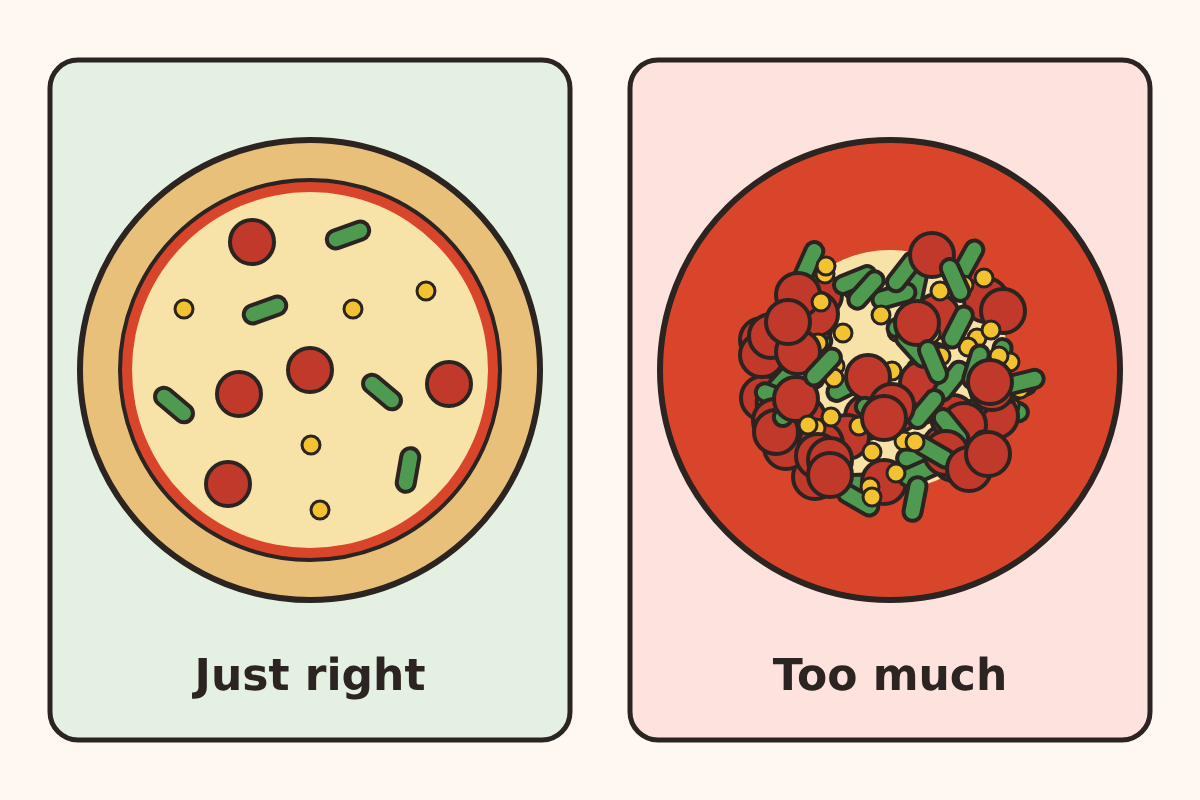
A simple rule for small hands: you should still see a little sauce or cheese between the toppings. If you can't, take a few off and save them for a second pizza.
Toppings and food safety
Use toppings that are already cooked or that cook in 10 minutes: pepperoni, cooked ham, cooked chicken, thinly sliced mushrooms and peppers, sweet corn, olives. Raw meat won't cook through on a pizza in that time. If you want sausage or ground beef, brown it in a pan first, cook it to 160°F (71°C) as the USDA advises for ground meat, and drain it before it goes on the pizza. Leftover cooked chicken should be reheated to 165°F (74°C).
Making it work for kids under 4
Whole round foods are a choking risk for young children, so before they go on a toddler's pizza:
- Cut cherry tomatoes and olives into quarters.
- Cut pepperoni slices into small strips rather than leaving whole rounds.
- Slice peppers and mushrooms thinly so they soften in the oven.
- Leave off whole corn kernels if your child is still learning to chew, or mash them lightly.
After baking, cut a toddler's pizza into small strips or bite-size squares and check that the middle has cooled.
Allergen swaps
- Gluten-free: use a gluten-free pizza dough mix or ready-made gluten-free crust and follow its package directions, since gluten-free doughs need different water and baking times.
- Dairy-free: use a dairy-free shredded cheese that says it melts, or skip cheese and add extra vegetables and a drizzle of olive oil.
- Sesame, soy and other allergies: some pizza sauces and ready-made crusts contain soy or are made alongside sesame, so read the labels.
Leftovers and make-ahead
Cool leftover pizza and refrigerate it within 2 hours, wrapped or in a container. It keeps for 3–4 days. Reheat slices in a 375°F (190°C) oven for 8–10 minutes so the crust crisps again. Cold pizza works in a school lunch too, as long as it travels with an ice pack, the same way you'd keep any packed lunch cold until lunchtime.
To get ahead, make the dough up to a day early: after kneading, put it in an oiled container with a lid in the fridge. Let it sit at room temperature for about 30 minutes before you shape it.
If your family likes dinners where everyone builds their own plate, a baked potato bar works the same way on a busy night, with even less hands-on time.
