Freezer Mini Banana Muffins: Bake Once, Pack Frozen All Week
Nut-free mini banana muffins you bake on the weekend, freeze, and pack straight from the freezer. They thaw by lunchtime. With kid jobs by age and allergen swaps.
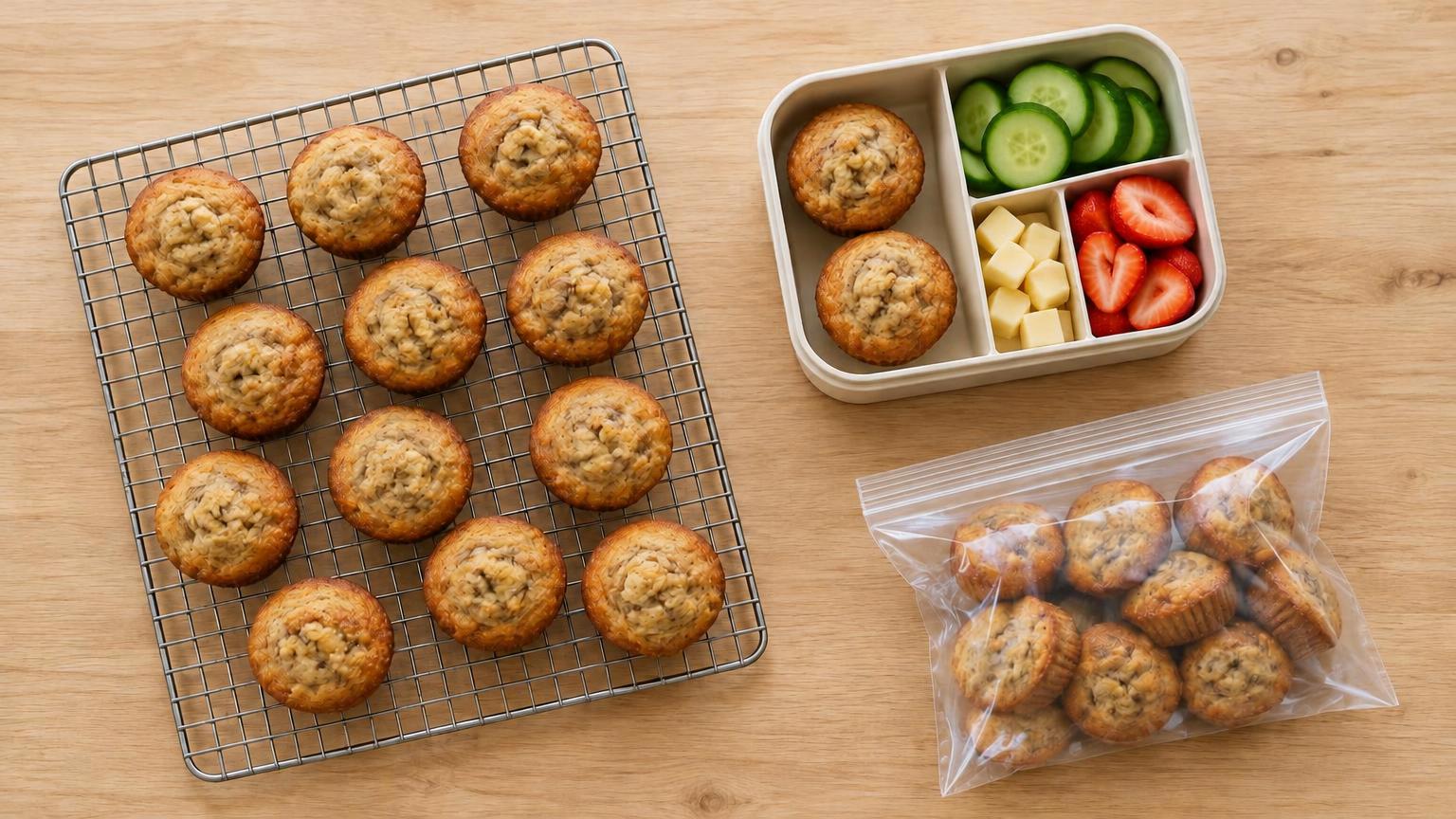
Bake a batch of mini banana muffins on the weekend, freeze them, and drop one or two into the lunchbox straight from the freezer each morning. Mini muffins are small enough to thaw on the way to school, so by lunch they are soft and ready to eat, and you never have to bake on a school morning. The recipe is nut-free, uses very ripe bananas, and takes one bowl.
Makes: about 36 mini muffins (or 12 regular) · Prep: 10 minutes · Bake: 12–15 minutes · Kid-friendly: very. Soft, mildly sweet, and a good first baking job for little helpers.
What you need
- 3 very ripe bananas, heavily speckled or brown (about 1 1/4 cups / 300 g mashed)
- 1/3 cup (75 g) butter, melted and cooled a little
- 1/3 cup (70 g) packed brown sugar
- 1 large egg
- 1 tsp (5 ml) vanilla extract
- 1 tsp (5 g) baking soda
- 1/4 tsp (1.5 g) salt
- 1 1/2 cups (190 g) all-purpose flour
- Optional: 1/2 cup (85 g) mini chocolate chips or 1/2 cup (75 g) blueberries
You also need a mini muffin pan (24 cups) and mini paper liners or a little oil for the pan.
The riper the bananas, the sweeter and softer the muffins. Bananas that look past eating are exactly right here. This recipe uses brown sugar rather than honey; if you swap in honey for older kids, keep these muffins away from babies under 12 months, because the CDC and AAP advise no honey at all before the first birthday, even baked.
How to make them
- Heat the oven to 350°F (175°C). Line the mini muffin pan with paper liners or brush the cups with oil.
- Mash the bananas in a large bowl with a fork until mostly smooth. A few small lumps are fine.
- Stir in the melted butter, brown sugar, egg and vanilla until combined.
- Sprinkle the baking soda and salt over the top and stir them in.
- Add the flour and fold it in gently, just until no dry flour shows. Stop there: overmixing makes muffins tough. Fold in the chocolate chips or blueberries if you are using them.
- Fill each cup about three-quarters full, roughly 1 tbsp of batter. A small cookie scoop makes this quick and keeps the muffins the same size, so they bake evenly.
- Bake for 12–15 minutes, until the tops spring back when pressed lightly and a toothpick in the middle comes out clean. For 12 regular muffins, bake for 20–24 minutes.
- Cool in the pan for 5 minutes, then lift them onto a wire rack. Bake the rest of the batter in a second round.
- Let them cool completely before freezing, about 30 minutes. Warm muffins sweat in the bag and turn sticky.
Freeze, pack, thaw
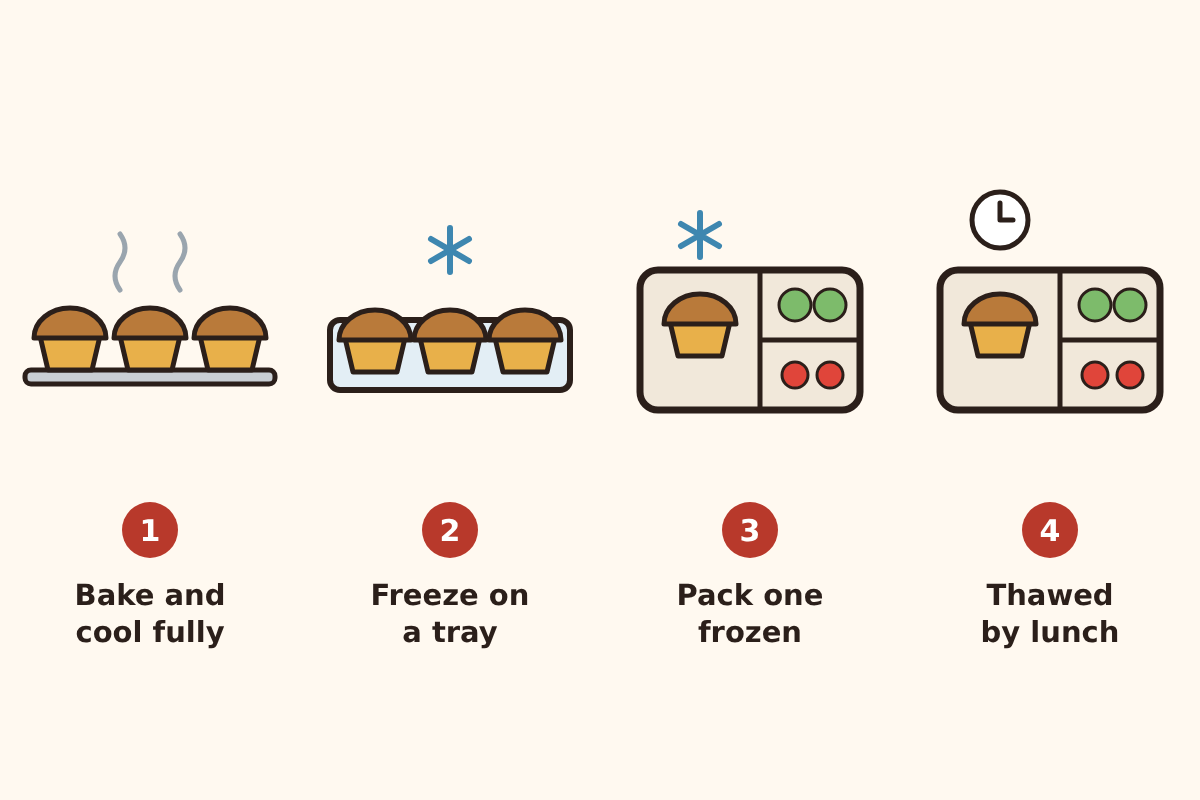
Spread the cooled muffins on a tray or plate so they are not touching and freeze them for about an hour, until firm. Then move them into a freezer bag or container and press out the air. Because they froze separately, they will not stick together, and you can take out exactly as many as you need. They taste best within about 2 months; after that they slowly dry out.
On school mornings, put one or two frozen muffins straight into the lunchbox. A mini muffin is small enough to thaw at room temperature within an hour or so, well before lunch. A frozen muffin is not a substitute for an ice pack: if the lunchbox also holds yogurt, cheese, meat or cut fruit, those still need one. Our guide to keeping a packed lunch cold covers how.
Muffins themselves can stay unrefrigerated. At home, keep a few in a sealed container at room temperature for up to 2 days and freeze the rest.
Lunchbox ideas
A mini muffin fits the treat or snack corner of a lunchbox. Some combinations:
- Two mini muffins, cheese cubes, cucumber slices and strawberries
- One muffin, a hard-boiled egg, carrot sticks and grapes (quartered for under 4s)
- A muffin as the side to a hot lunch in an insulated food jar, like soup or pasta
- An after-school snack with a glass of milk or a piece of fruit
For more nut-free lunchbox plans, try these nut-free lunchbox combinations.
For younger kids
Muffins are soft, but small children can still stuff a whole one in their mouth. For children under 4, break each muffin into a few pieces and sit with them while they eat. Mini chocolate chips are fine; leave out nuts, which the AAP lists as a choking hazard for young children. Blueberries baked into a muffin go soft, but whole raw blueberries on the side are best squashed or halved for toddlers.
Jobs for kids
- Ages 2–3: with help, mash the bananas with a fork or potato masher, and drop paper liners into the pan.
- Ages 4–7: stir in the sugar and vanilla, crack the egg into a small bowl first (fish out any shell), and fill the liners with a spoon.
- Ages 8–12: measure everything, use the scoop, and check the muffins with a toothpick while an adult holds the hot pan.
- Teens: make the whole batch, including the oven, and run the freezer system for the week.
An adult handles the oven and the hot pan for younger kids, and melts the butter. Wash hands after touching raw egg, and don't let anyone taste the raw batter: it contains raw egg and raw flour, which CDC advice says not to eat.
Allergen swaps
- Nuts: none in the recipe. Check the chocolate chips label for "may contain nuts" if your school is nut-free.
- Eggs: mix 1 tbsp (7 g) ground flaxseed with 3 tbsp (45 ml) water, leave it for 5 minutes until thick, and use it in place of the egg. The muffins will be a little denser.
- Dairy: swap the butter for the same amount of a neutral oil, such as sunflower or canola, and check that the chocolate chips are dairy-free.
- Gluten: use a 1:1 gluten-free baking flour blend in place of the all-purpose flour.
- Soy and sesame: none in the basic recipe; some chocolate chips contain soy, so check the label.
