Thanksgiving Jobs for Kids by Age: Real Tasks From Toddlers to Teens
A three-year-old can make a real contribution to Thanksgiving dinner, and a teenager can make the pie. What to hand each age, the jobs that stay with grown-ups, and how to keep a crowded kitchen calm.
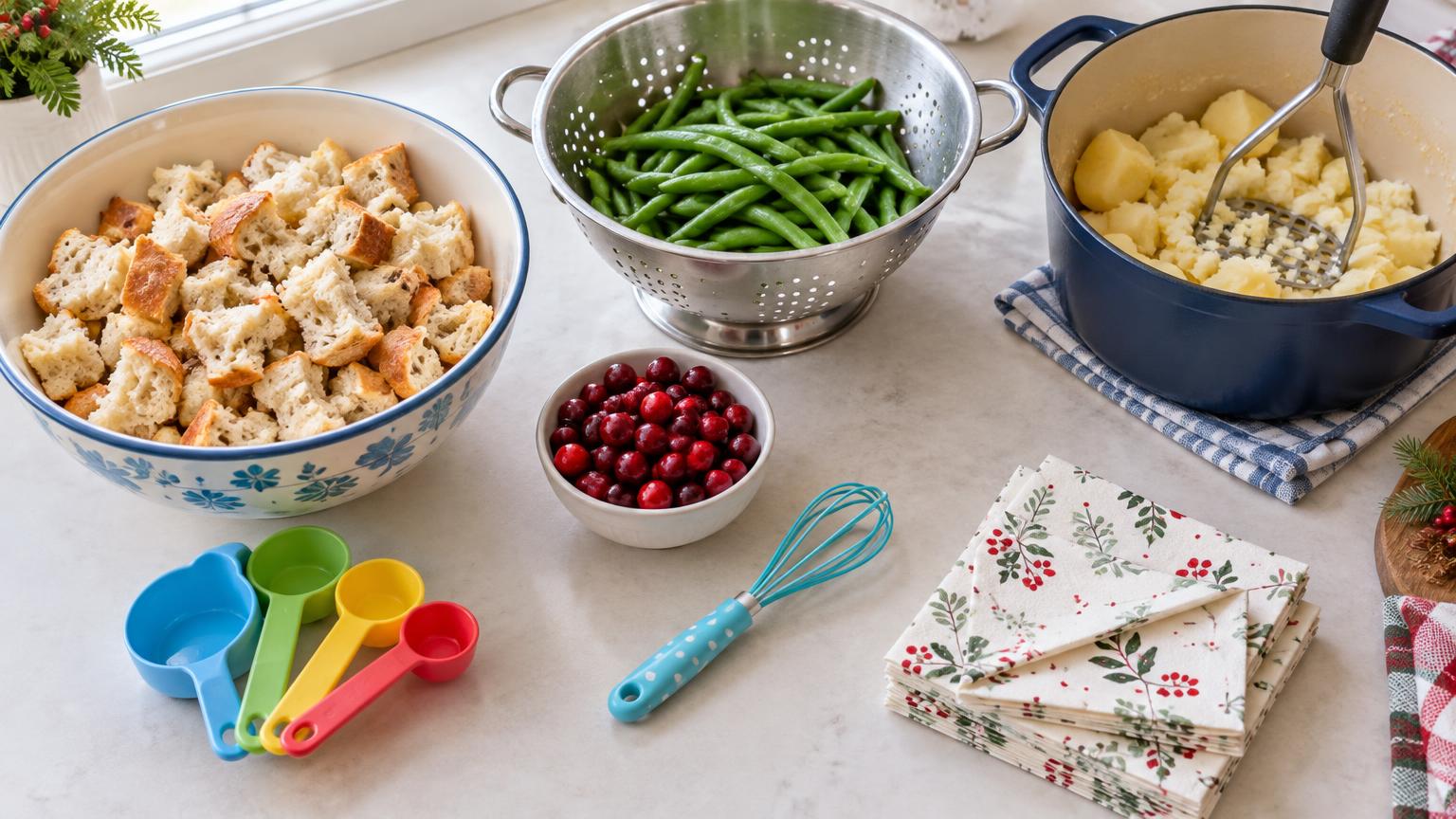
Every child old enough to stand at a counter can help with Thanksgiving dinner. Toddlers can wash potatoes and tear bread for stuffing; 4- to 7-year-olds can measure, mash and whisk; 8- to 12-year-olds can peel, chop soft foods and follow a recipe; teens can take on a whole dish with an adult nearby. The grown-ups keep the jobs that involve the oven, boiling pots, sharp knives, raw turkey and the carving.
Here is how to share out the day so everyone has a real job, plus the few kitchen rules that keep it safe and calm.
Before anyone starts: five kitchen rules
Read these out loud before the aprons go on. They work best when kids hear them every time.
- Wash hands with soap for 20 seconds before cooking, and again after touching raw meat or eggs.
- Grown-ups handle the oven, the stovetop, boiling water, sharp knives and electric appliances unless they say otherwise.
- Raw turkey stays with the grown-ups. Its juices can carry germs, so it does not get rinsed in the sink, and kids do not touch it or anything it touched until it is washed.
- Pot handles turn in, toward the back of the stove, so nobody knocks them.
- No tasting anything with raw egg or raw flour in it, which means no licking the pie-filling spoon. Raw flour and raw eggs can both carry germs.
Give each child a job that is properly theirs, from start to finish, rather than a little bit of everything. A finished dish they can point to at the table is the best part.
Toddlers (about 2 to 3)
Toddlers love jobs with their hands and big movements. Set them up at a low table or on a sturdy step stool with a grown-up right beside them.
- Wash potatoes, sweet potatoes and carrots in a bowl of water with a vegetable brush.
- Tear bread into pieces for stuffing. Torn pieces work as well as cubes, and it keeps small hands busy for a long time.
- Snap the ends off green beans, if you show them where.
- Pour pre-measured ingredients into a bowl.
- Put rolls into a basket and napkins on the table.
What they learn: following one step at a time, and that food comes from somewhere before it reaches the plate.
Ages 4 to 7
This age can follow two or three steps in a row and loves measuring and mixing.
- Measure dry ingredients with cups and spoons, levelling them off with the back of a butter knife.
- Mash cooked, cooled potatoes with a potato masher, once a grown-up has drained them.
- Whisk eggs for the pie filling, in a big bowl so it does not splash.
- Crack eggs into a separate small bowl first, so shells can be fished out. Wash hands afterwards.
- Cut soft foods, such as bananas, cooked carrots or butter, with a child-safe knife or a butter knife. Our fruit salad with kids has more practice ideas for first knife skills.
- Arrange a turkey snack plate to keep everyone happy while dinner cooks.
- Make place cards, or draw a menu for the table.
What they learn: counting and measuring, careful pouring, and how mixing changes what is in the bowl.
Ages 8 to 12
Many kids this age can handle a whole simple recipe, with an adult close by for heat and sharp knives.
- Peel carrots and potatoes with a Y-shaped vegetable peeler, peeling away from their hands.
- Chop celery and onion for stuffing with a small sharp knife, if they have already practised knife skills with you. Teach the bridge hold and the claw grip, and stay next to them.
- Make the cranberry sauce on the stovetop, with an adult in the kitchen the whole time. Cranberries pop as they cook, so long sleeves and a long spoon help.
- Roll out pie dough and crimp the edge.
- Mix and season the stuffing, and spread it in the dish.
- Set the table and plan where everyone sits.
What they learn: reading and following a recipe from top to bottom, timing, and using real tools carefully.
Teens
Teens can run a dish of their own, start to finish. Agree first on which steps they do alone and when they call you.
- Own a side dish: roasted vegetables, mashed potatoes or green beans, including the oven work, with oven mitts and an adult in the house.
- Make and bake the pumpkin pie, including blind baking the crust.
- Make the gravy from stock, whisking it smooth as it thickens.
- Check the turkey's temperature with a food thermometer alongside a grown-up. It is done when the thickest part of the breast, the innermost thigh and the innermost wing all read 165°F (74°C).
- Plan the oven schedule, so the stuffing, rolls and vegetables all fit around the turkey.
What they learn: planning several things at once, and working safely with heat.
Jobs that stay with grown-ups
Whatever a child's age, adults take care of:
- Putting the turkey in and out of the oven, and anything else heavy and hot.
- Draining pots of boiling potatoes or pasta.
- Carving the turkey.
- Using sharp knives to cut hard, round vegetables like squash.
- Handling raw turkey, and cleaning up after it.
A plan for a busy kitchen
Too many helpers in one small space is how spills and burns happen. A few things help:
- Set up stations away from the stove: a "washing station" at the sink, a "mixing station" at the table.
- Do the kid jobs the day before when you can. Pie, cranberry sauce, tearing bread and setting the table can all happen on Wednesday, and the kitchen is calmer.
- Have a cleanup job for everyone, too. Kids can wipe the table, load plastic bowls into the sink and sort recycling.
After the meal
Leftovers need to be in the fridge within 2 hours, which is a good job for older kids: spoon them into shallow containers and label them with the date. Then the Monday-after lunchbox is half made: our ideas for packing Thanksgiving leftovers for school lunch show how to keep them safe until lunchtime.
If your kids caught the cooking bug, a weekend pizza night where everyone has a job is an easy next project.
