Fruit Salad With Kids: A First Knife Skills Recipe by Age
A simple fruit salad to make with kids, with jobs for toddlers, 4–7s, 8–12s and teens, the bridge and claw knife grips, how to cut round fruit safely, choking-safety tips for under-4s and allergen swaps.
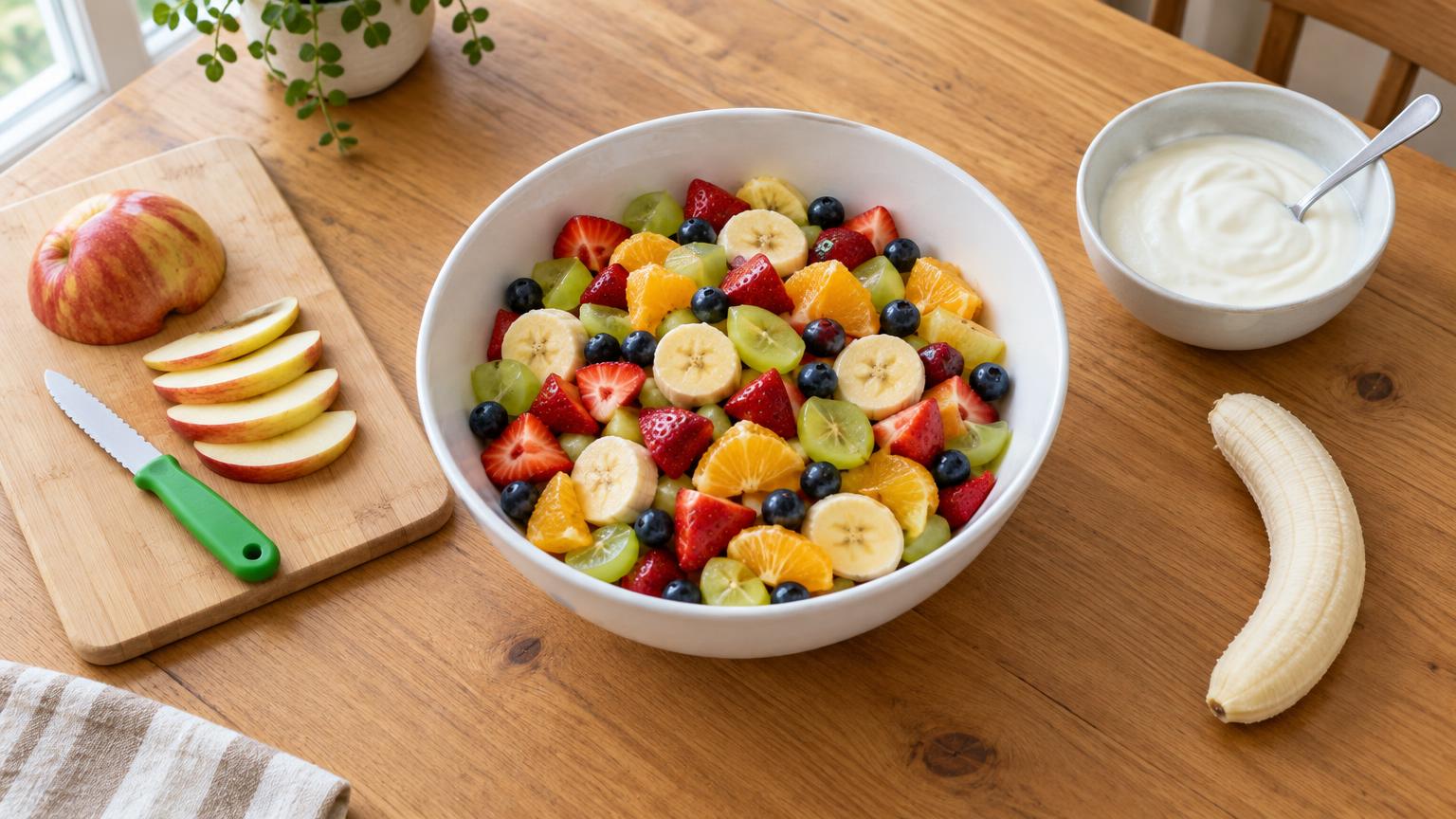
Fruit salad is the best recipe for a child's first real knife practice. Soft fruit gives way easily, a wobbly slice still tastes great, and nothing goes near the stove. Toddlers can tear and toss, 4–7s can slice bananas with a child-safe knife, 8–12s can learn the bridge and claw grips on firmer fruit, and teens can run the whole bowl. The adult cuts anything hard or slippery until a child is ready.
Serves: 4–6 · Prep: 20–30 minutes · Cook: none · Kid-friendly: very. Every age has a job, and kids tend to eat what they cut.
Allergens: the fruit itself contains none of the common allergens. The yogurt dip contains dairy; swaps are below.
What you need
- 2 cups (about 300 g) strawberries
- 2 medium bananas (about 240 g peeled)
- 2 clementines or 1 large orange (about 180 g peeled)
- 1 1/2 cups (about 225 g) seedless grapes
- 1 cup (150 g) blueberries
- 1 medium apple (about 180 g)
- 1 tbsp (15 ml) lemon or orange juice
For the optional dip:
- 1 cup (240 g) plain or vanilla yogurt
- 1 tsp (7 g) honey or maple syrup (maple syrup only for babies under 12 months; see the safety notes)
Tools: a cutting board for each child, a damp paper towel or cloth under each board so it doesn't slide, a small child-safe serrated knife (nylon for the youngest), a sharp paring knife for the adult, and a large bowl.
Any mix of fruit works. Use roughly 7 cups (about 1 kg) in total and choose what your family will actually eat.
Who does what, by age
Hand out the jobs before you start and read each step aloud. The lists build on each other: a 9-year-old can also do everything on the toddler list.
Toddlers (2–3): rinse fruit in a colander, pull the green tops off strawberries, peel clementines once an adult has started the peel, break segments apart, and tip prepared fruit into the bowl. Skills: grip, pinching, and following one instruction at a time.
Ages 4–7: peel bananas and slice them with a nylon or child-safe serrated knife, cut hulled strawberries in half, and stir the dip. Bananas are the perfect first cut: soft, flat once peeled, and they don't roll. Skills: holding a knife by the handle, keeping the other hand away from the blade, and sawing gently.
Ages 8–12: cut grapes and strawberries into smaller pieces, slice apple quarters using the claw grip, and squeeze the lemon juice. Skills: the bridge and claw grips, and cutting pieces the same size.
Teens: core and slice the apple, cut citrus, plan the mix, and make the whole bowl with an adult in the kitchen the first few times. Skills: knife control with a sharp knife and planning a recipe start to finish.
The adult always does: any cut with a sharp knife for younger kids, the first cut through a whole apple or orange, and cleaning and putting away sharp knives.
Two grips to teach first
Both grips keep fingertips out of the way of the blade.
The bridge. Make an arch over the fruit with your thumb on one side and your fingers on the other, holding it steady. The knife goes under the arch and cuts down through the fruit. Use it for the first cut through something round, such as halving a strawberry or an apple quarter.
The claw. Curl your fingertips under, like a cat's paw, and rest them on top of the fruit. Your knuckles face the knife and the blade moves along them as you slice, so fingertips stay tucked behind. Use it for slicing a long or flat piece into many pieces, such as a banana or a row of apple slices.
Practise each grip a few times with no knife at all, then on a banana. Say the name of the grip out loud each time: kids pick it up faster when it has a name.
Round fruit: flat side down
The most common slip in a kid's first knife session comes from cutting something that rolls. A whole apple or a whole grape moves under the blade, and the hand holding it moves with it.
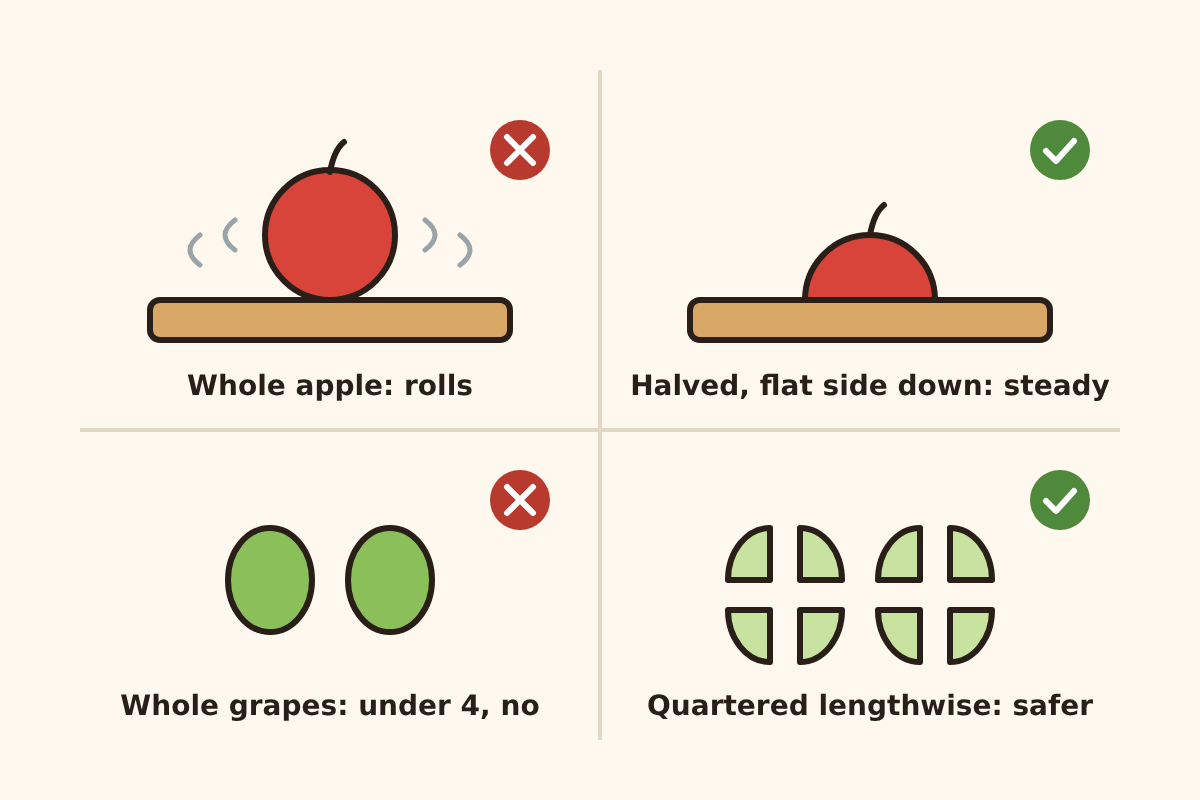
The fix is one rule: make a flat side first. An adult halves the apple, puts each half flat side down on the board, and only then hands over the next cuts. The same goes for oranges and big strawberries. Once a piece sits flat, a child can use the claw grip on it safely.
How to make it
- Wash hands, everyone. Tie back long hair and put a damp towel under each cutting board.
- Rinse the strawberries, grapes, blueberries and apple under cool running water and pat them dry. The FDA advises plain running water for produce; soap or produce wash is not needed.
- Hull the strawberries and cut them in halves or quarters, depending on size.
- Peel the clementines and separate the segments. Cut big segments in half.
- Peel and slice the bananas into rounds about 1/2 inch (1 cm) thick.
- Cut the grapes in half lengthwise, or into quarters for children under 4.
- The adult quarters and cores the apple. Lay each quarter flat and slice it thinly.
- Put the apple and banana in the bowl first and toss them with the lemon or orange juice. The acid slows the reaction that turns cut apple brown.
- Add the rest of the fruit and toss gently with a big spoon.
- Stir the honey or maple syrup into the yogurt for the dip and serve it on the side.
Serve right away or cover and refrigerate. Cut fruit shouldn't sit out at room temperature for more than 2 hours. It's at its best on the day it's made; the banana softens by the next day.
Making it safe for kids under 4
Whole round foods are a choking risk for young children. The AAP and CDC both advise cutting them into small pieces. For a toddler's bowl:
- Cut grapes lengthwise into quarters.
- Cut blueberries in half or flatten them gently between your fingers.
- Slice apple very thinly, or grate it. Chunks of raw apple are hard to chew.
- Cut strawberries and banana into small pieces, about the size of a fingertip.
Sit down to eat, and stay close while young children are eating.
Allergen swaps and safety notes
- Dairy: use a plant-based yogurt for the dip, and check the label for nuts, soy or coconut if those matter in your family.
- Honey: never give honey to babies under 12 months. The CDC links it to infant botulism. Use maple syrup or leave the dip unsweetened.
- School lunches: fruit salad is nut-free as written, so it fits a nut-free lunchbox. Pack it with an ice pack; our guide to keeping a packed lunch cold shows how, and there are more combinations in our nut-free lunchbox ideas.
Where to go next
Once your kids can slice a banana with the claw grip, they're ready for softer toppings on a pizza night. Our homemade pizza jobs for every age builds on the same knife skills, with an oven step the adult handles.
