Why Does Bread Rise? The Science of Yeast, Explained for Kids
Bread rises because yeast, a tiny living fungus, eats sugar and makes carbon dioxide, and stretchy gluten traps it in bubbles. Here is how it works, why the oven gives one last puff, and a balloon experiment that shows it happening.
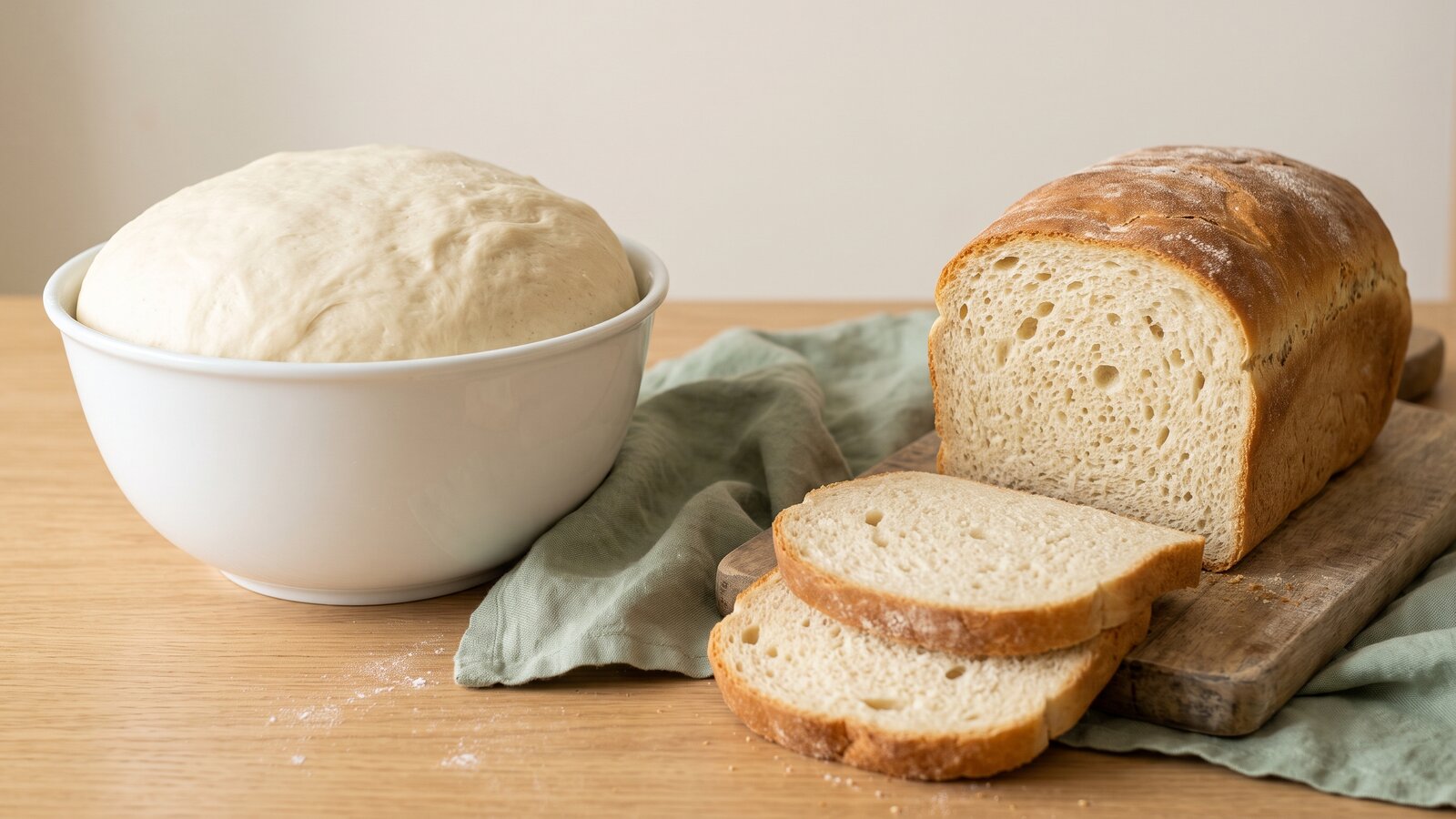
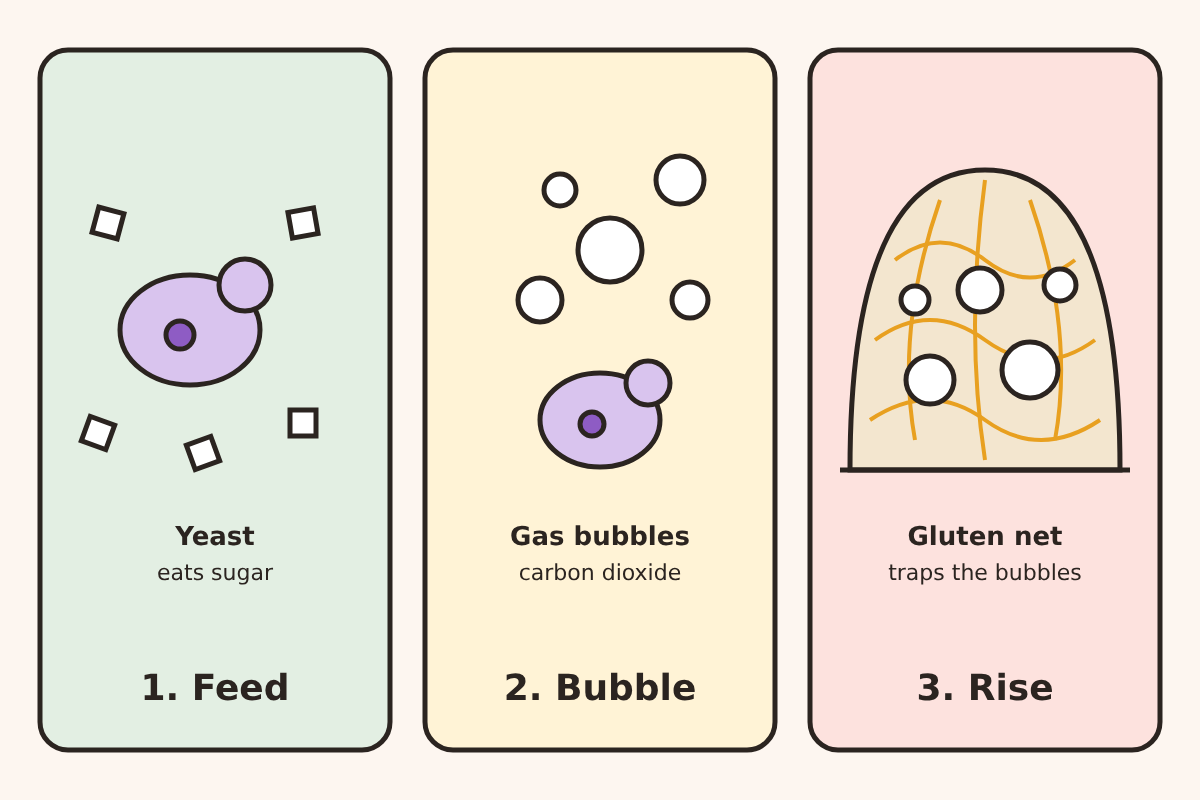
Bread rises because of a living thing hiding in the dough. Yeast, a tiny single-celled fungus, feeds on the sugars in flour and gives off carbon dioxide gas. Kneading builds a stretchy web of protein called gluten, and that web traps the gas in thousands of little bubbles, so the whole dough puffs up like a balloon. In the oven the bubbles grow one last time, then the bread sets around them. Those holes you see in a slice of toast are where the gas used to be.
Meet the yeast
The yeast in a packet from the supermarket is a microbe called Saccharomyces cerevisiae, often just called baker's yeast. It's a fungus, a very distant cousin of mushrooms, but each one is a single cell far too small to see. A standard 1/4 oz (7 g) packet holds a huge number of them, dried out and asleep.
Add warm water and they wake up. Yeast eats sugar, and flour has plenty once the dough gets going: flour contains its own enzymes that break some of its starch down into sugars the yeast can use. As the yeast digests that sugar, it makes two things the baker cares about:
- Carbon dioxide, the same gas that makes fizzy drinks fizz. This is what lifts the dough.
- A little alcohol, which adds to bread's flavour and almost all of which evaporates in the oven.
Food scientist Harold McGee explains this process in detail in his book On Food and Cooking, and it's the same basic chemistry bakers have relied on for thousands of years, long before anyone knew yeast existed.
Why gas alone isn't enough
Mix yeast, sugar and water in a glass and it will foam, but nothing rises. The gas just floats away. Dough needs something to catch it, and that's gluten.
Wheat flour contains two proteins, glutenin and gliadin. When they meet water and get pushed around by kneading, they link up into long, stretchy strands. Kids can feel this happen: a shaggy, sticky lump turns smooth and springy after a few minutes of kneading. That springiness is the gluten network forming.
Now each bubble of carbon dioxide is wrapped in a thin, stretchy wall of gluten. As the yeast keeps making gas, the bubbles inflate, the walls stretch, and the dough grows. This is why a recipe like our homemade pizza dough tells you to leave it somewhere warm until it has about doubled in size.
Warmth matters because yeast is alive. In a cool kitchen it works slowly; in a warm spot it works faster. Some bakers use this on purpose and rise their dough slowly in the fridge overnight for more flavour.
The last big puff in the oven
When dough goes into a hot oven, it gets one final burst of growth, which bakers call oven spring. The heat makes the gas in the bubbles expand, the yeast works furiously for a few minutes, and some of the water and alcohol in the dough turn to vapour and push the bubbles even bigger. Steam does the same job much more suddenly inside a popcorn kernel as it bursts open.
Then the heat wins. The yeast dies, the gluten and starch set firm around the bubbles, and the shape is locked in. The outside dries and browns into a crust, thanks to the Maillard reaction, the same browning that happens on toast and roasted vegetables. That's where much of the smell of baking bread comes from.
What about bread without yeast?
Not every bread uses yeast. Two other ways to make the same carbon dioxide bubbles are worth knowing:
- Baking soda is a base. Mix it with something acidic, such as buttermilk or yogurt, and it fizzes out carbon dioxide straight away. Soda bread and many muffins rise this way.
- Baking powder is baking soda with a dry acid already mixed in, so it only needs liquid to start fizzing. Many brands are "double-acting", meaning they release a second round of gas when they get hot in the oven.
Sourdough sits at the other end. It uses a starter full of wild yeasts and friendly bacteria instead of packet yeast. The bacteria make acids that give sourdough its tang, and the wild yeasts make the gas. It's slower, which is why a sourdough loaf can take a day or more from start to finish.
Who made the first risen bread?
Nobody knows. People were making flatbreads long before risen loaves, and archaeologists link early leavened bread with ancient Egypt, where bread was an everyday food. You'll often hear a story that an Egyptian baker forgot some dough, wild yeast from the air landed in it, and it puffed up. That's a legend: it's a reasonable guess at how it might have happened, but nobody recorded the moment. It's still a fun story to tell at the table, as long as everyone knows it's a story.
Try it at home: the yeast balloon test
This experiment lets kids watch yeast make gas without baking anything, and it shows why bakers care about water temperature.
Time: 10 minutes to set up, 20–30 minutes to watch · Ages: 4 and up with an adult · Allergens: none from the food; check for latex allergy if you use latex balloons.
You need:
- 3 clean, empty plastic bottles, about 16 oz (500 ml) each
- 3 packets (1/4 oz / 7 g each) active dry yeast, or 6 3/4 tsp (21 g) from a jar
- 3 tbsp (about 36 g) sugar
- 1 1/2 cups (360 ml) water, split three ways: cold from the fridge, warm, and hot
- 3 balloons, stretched out a few times first
- A funnel and a kitchen thermometer
Steps:
- Put 1 packet of yeast and 1 tbsp (12 g) sugar into each bottle, using the funnel.
- Add 1/2 cup (120 ml) cold water to the first bottle.
- An adult adds 1/2 cup (120 ml) warm water to the second bottle. Aim for the temperature on your yeast packet; for active dry yeast that's usually around 105–110°F (40–43°C), comfortably warm on the inside of a wrist.
- An adult adds 1/2 cup (120 ml) hot water to the third bottle, about 150°F (65°C), checked with the thermometer. This is too hot to touch safely, so kids stay back for this step.
- Swirl each bottle gently, then stretch a balloon over each neck.
- Set a timer and check every 5 minutes. Which balloon stands up first?
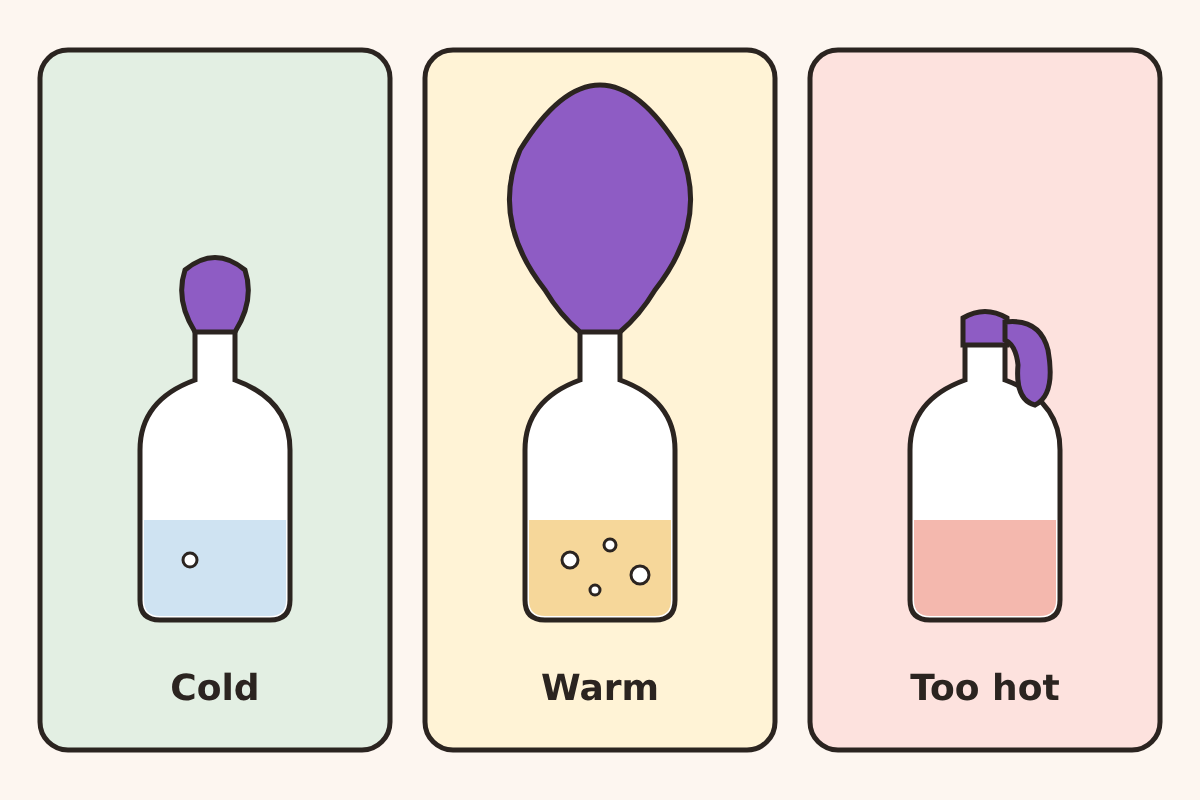
The warm bottle usually wins by a wide margin. The cold one makes some gas, just slowly. The hot one should make little or none, because the heat has killed most of the yeast. That's the same reason a bread recipe warns you not to use water that's too hot: dead yeast can't lift dough.
Jobs by age. Toddlers can watch the balloons and say which is biggest. Kids 4–7 can spoon in the sugar and yeast and swirl the bottles. Kids 8–12 can measure, read the thermometer once an adult has poured, and keep a simple chart of what happens every 5 minutes. Teens can design a fairer test, for example by running it twice and checking that the results match.
Safety notes. Balloons are a choking hazard for children under 8: the US Consumer Product Safety Commission warns that uninflated or broken balloons can choke or suffocate young children, so an adult handles them and throws away any broken pieces. Nobody drinks the mixture. If you go on to bake, don't taste the raw dough either; the CDC warns that raw flour can carry germs such as E. coli that only cooking kills.
Bread questions kids ask
Can people with celiac disease eat bread? Regular bread is made with wheat, which contains gluten, so it's not suitable for anyone who must avoid gluten. Gluten-free breads use other flours plus ingredients such as xanthan gum or psyllium husk to do the bubble-holding job gluten normally does, which is why their dough feels more like a thick batter.
Why do some breads have big holes and others tiny ones? Wetter doughs, gentler handling and long, slow rises tend to give bigger, more uneven holes. Sandwich loaves are shaped tightly and rise in a pan, so their holes stay small and even.
Once kids know there's a tiny living helper in every loaf, bread-making feels a lot more like a science lab. If they enjoyed this, the same kind of hidden kitchen chemistry explains why onions make you cry.
